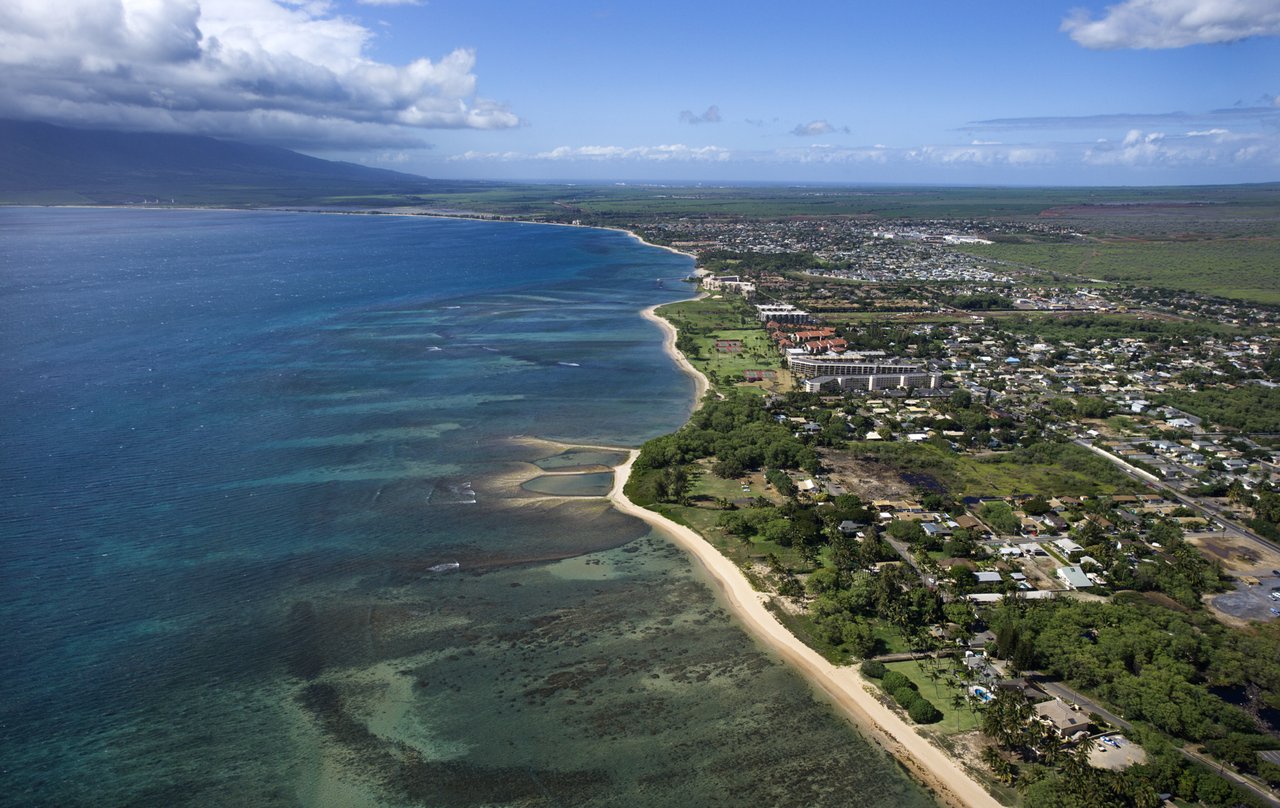
Somewhere before seven this morning, a handful of longboards were already out past the reef at the far west end of Ho'okipa, working the reef break locals call the Point. No sail in sight. No kite. Just the low click of paddling and the kind of quiet that only exists on this stretch of Hana Highway for a couple of hours a day, before the wind finds its legs and the whole character of the beach changes.
Every visitor guide to Ho'okipa repeats some version of the same line: mornings belong to surfers, afternoons belong to the sails. It's true, but it's also a flattened version of what's actually happening out there, and if you've lived in Paia long enough to have an opinion about parking at the beach park, you've probably noticed the flattened version doesn't quite match what you see when you drive past at noon versus at four. The handoff isn't a beach-wide event. It happens at exactly one of Ho'okipa's four breaks, it's governed by an actual rule with a headcount in it, and the whole arrangement runs on a calendar that's about to loosen for the season.
Four breaks, four different deals
Ho'okipa isn't one wave. County-recognized surf spots divide the park into four sections, running east to west, and each one runs on its own terms.
| Break | Location | Who gets it |
|---|---|---|
| Pavilions | Easternmost, below the lookout | Surfing only, most of the day |
| Middles | West of Pavilions | Mostly surfing, some windsurf crossover |
| H'poko (the Point) | West end of the beach | Surfing in the morning, windsurfing once afternoon trades fill in |
| Lanes | Fronting Wana Beach, just west | Windsurfing and kiting only |
Pavilions doesn't trade hands. It's a surf break in the morning and it's a surf break at four in the afternoon, wind or no wind. Lanes runs the opposite way. It belongs to sails and kites from the moment the park opens, and surfers generally leave it alone. The only place where the day actually changes ownership is H'poko, the Point, and that's where the posted rules get specific: no windsurfing before 11am, and no windsurfing at all if ten or more surfers are already in the water there. That second rule is the one most people driving past have never heard, and it means the handoff at H'poko isn't a clock striking eleven so much as a negotiation that depends on how crowded the morning session already is.
If you've ever told a visiting friend that Ho'okipa "switches over" around midday, you were half right. One quarter of the beach switches. The rest of it never changes teams at all.
Why the window is wider right now than it will be in a month
The reason H'poko's afternoon wind session feels so reliable this time of year comes down to timing that has nothing to do with the beach itself. Northeast trade winds dominate Hawaii from May through September, according to the National Weather Service, and on Maui's north shore those afternoon trades commonly build past 20 knots once thermal heating kicks the wind into gear, typically somewhere between 1 and 5 in the afternoon. That's the engine behind the entire second half of the Ho'okipa day, and it's also why the windsurfing and kiting crowd treats this particular stretch of the calendar as prime season.
We're now deep into September, which puts Paia near the tail end of that reliable trade-wind run. Winter brings the opposite trade: bigger north swells start lighting up the reef at Pavilions and Middles, board surfers get more of the day, and the wind that currently owns the mid-afternoon becomes less of a guarantee. None of this happens on a fixed date. It's a gradual handoff, not a switch flip, but if you've built your last few months around a predictable 1 o'clock wind window at H'poko, the next stretch of the calendar is the one to watch. The rhythm most residents have gotten used to over the summer starts to loosen from here, not because anyone changed the rules, but because the wind that enforces them shows up less consistently once fall settles in.
The town runs the same arc the beach does
Baldwin Avenue and the stretch of Hana Highway through town keep pace with the beach rather than running on their own separate schedule, and the businesses that do best here are usually the ones built around more than one shift.
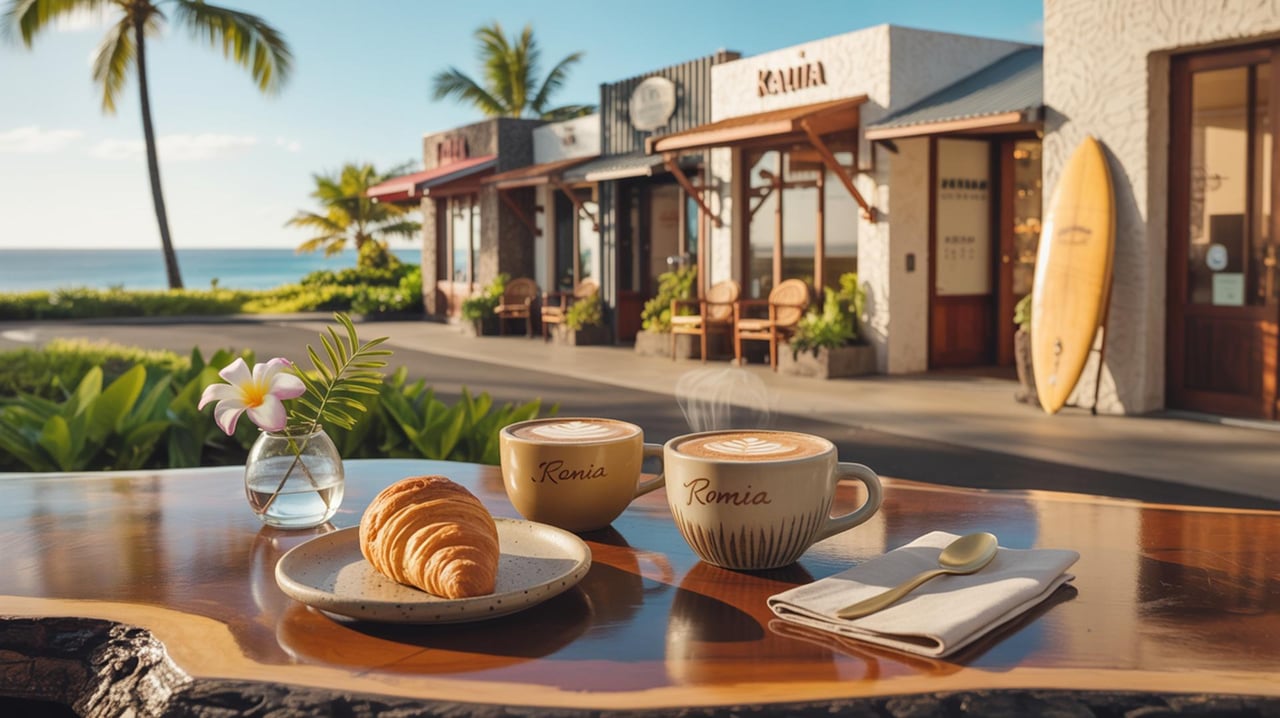
Story Maui, on Baldwin Avenue, is maybe the clearest example. It opens as a coffee and pastry counter in the morning, the same hours the Point belongs to surfers. By afternoon the same room is serving Japanese ramen, right around when the wind starts filling in. By evening it turns into a venue for local music and art, timed to when the beach itself has mostly cleared out and turtles start hauling onto the sand at Ho'okipa's west end for the night. Volunteers often rope off that stretch of beach once the honu arrive, and the unwritten rule there is the same as everywhere else on this coast: stay back and let them rest.
A resident's day, mapped against both clocks, looks something like this:
- 6 to 9am — Surfers work the reef at H'poko and Pavilions while the wind is still asleep. Kuau Store, just up the road toward Ho'okipa, and Mana Foods back in town handle the pre-session coffee and food runs.
- 9 to 11am — The quietest stretch of the morning. Surfers still have H'poko to themselves under the posted rule, and the crowd at the lookout is thin.
- 11am to 1pm — The negotiation window at H'poko begins. Once ten or more surfers are out, windsurfers wait it out from the beach.
- 1 to 5pm — Trade winds build past 20 knots most afternoons this time of year. Lanes and H'poko fill with sails and kites. Paia Bay Coffee & Bar, an open-air spot near the water, tends to fill in right alongside them.
- Evening — Flatbread Company runs its long-standing Tuesday benefit nights, donating proceeds to local nonprofits, and this month that includes a Pizza with a Purpose fundraiser on September 29. Down the road, honu start coming ashore at Ho'okipa's west end for the night.
Even Lima Cocina + Cantina, a Peruvian spot on Baldwin Avenue, times its happy hour to the same window the wind owns, running specials from 2 to 5pm most days. Nobody coordinated this. It's just what happens when a town sits this close to a beach that runs on its own internal clock.
What this actually changes for you
None of this is a reason to rearrange your week. It's a reason to be a little more precise the next time you're explaining Ho'okipa to someone new, or deciding where to point your own morning. If you're heading to the Point before eleven, you're not beating a beach-wide curfew, you're working inside a rule that only applies to that one break, and it can end early if the lineup fills up. If you're chasing wind in the early afternoon, you're catching the tail end of the reliable stretch of trade season, not a guarantee that carries the same way into November. And if you've always assumed the whole beach flips over at some fixed hour, Pavilions and Lanes have been quietly proving otherwise the entire time.
Paia rewards the kind of attention that notices which corner of a beach actually changes and which one doesn't. That's the same instinct that matters when you're trying to understand any part of this town closely, whether it's a wave, a storefront, or a piece of property. Riette Jenkins has spent decades paying attention to exactly this kind of detail across Maui's North Shore and South Maui markets alike, and is always glad to talk story about what makes a specific corner of this island work the way it does.
This article is general information, not legal, tax or financial advice. Consult a qualified professional about your situation.