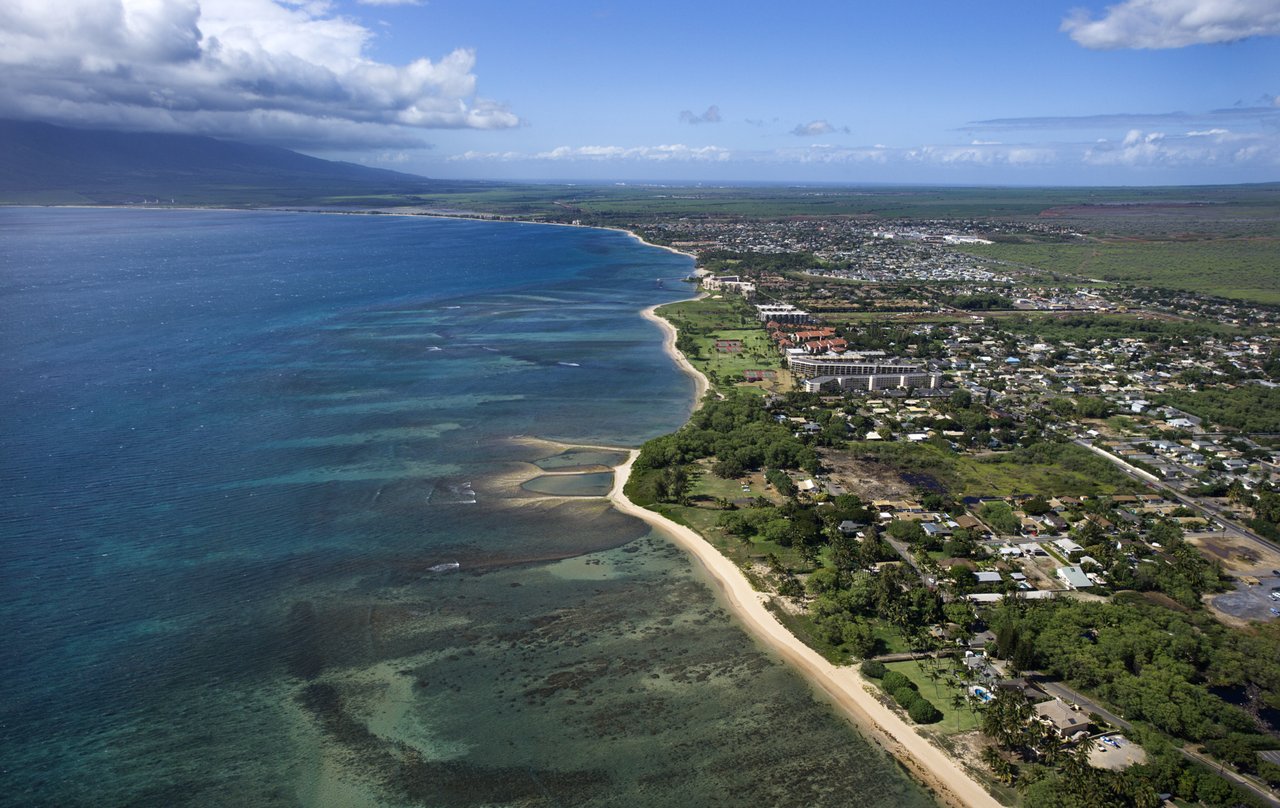
Sam Garcia Jr. has lived next to Keawalaʻi Congregational Church in Mākena for 50 years. There are beach showers near his home. When he testified in Wailuku this summer, he described people arriving every evening "with radios blaring" to rinse off in the cold water and screaming at "all hours of the night," as Maui Now reported. Garcia has been president of the Mākena Homeowners Association since 2005. He spent close to four decades asking for restrooms and showers at Mākena State Park.
He got them, on paper. On July 14, 2026, the Maui Planning Commission voted 6–1 to grant the state a Special Management Area permit for two comfort stations with showers at the park. The permit came with conditions, and the biggest changes made before the vote govern what happens at Oneloa after sunset.
What's actually going in
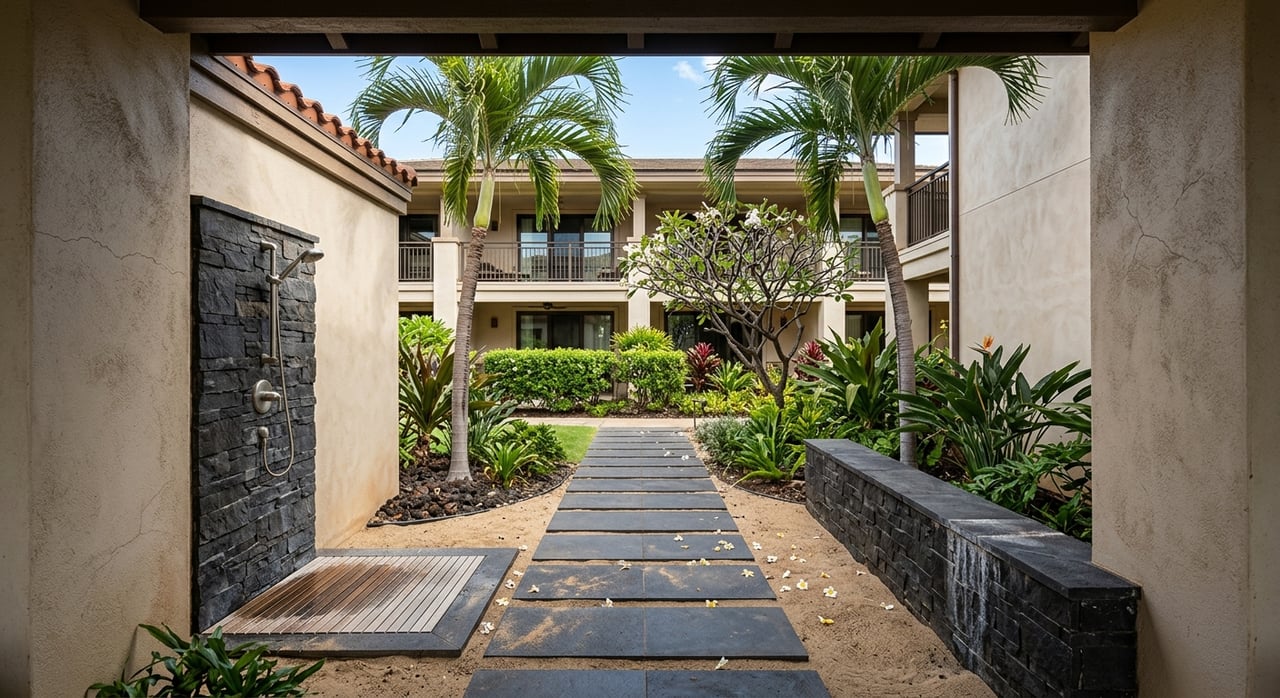
Today the park has five portable toilets at the beach entrance and no showers. People who use Mākena have learned to bring their own jugs of water or drive to other beach parks to rinse off. The Division of State Parks plans two 1,300-square-foot comfort stations next to the north and south parking lots. Each will have four women's toilets, three men's toilets, a urinal and interior sinks. An outdoor shower goes beside each building, and new water lines will also feed a water-filling station.
Parking changed more than anything else between the first draft and the vote. Right now about 100 cars use road shoulders and gravel areas that were never designated as stalls, alongside the striped spaces, according to State Parks. The earlier plan would have increased paved parking from 97 stalls to 235. The revised plan approved in July puts more parking on pervious surfaces to cut rain runoff and paves only a limited number of stalls to meet the Americans with Disabilities Act, The Maui News reported. Albert Perez, executive director of Maui Tomorrow, called the pervious-surface change "a victory."
One light per building, off at eight
Most of the July revision deals with darkness. Hawksbill turtles, or honuʻea, nest at Oneloa. The Maui News, citing the Hawaiʻi Wildlife Fund, reported four hawksbill nests in the park in 2025. In a July 2 letter, State Parks said it had consulted with the U.S. Fish and Wildlife Service. It cut the exterior lights on each comfort station from six to one: a shielded, downward-facing fixture recessed under the roofline on the side away from the shoreline. Every interior and exterior light will run on a timer and shut off at 8 p.m. That gives staff about an hour after closing to clean. The division also said it could dim or remove the remaining light if park operations turn out not to need it.
That 8 p.m. shutoff lines up closely with the park's posted hours:
| Area | Posted hours |
|---|---|
| Oneloa (Big Beach) and Oneuli (Black Sand Beach) | Daily, 5 a.m. to 7 p.m. |
| Same beaches, May through July | 5 a.m. to 7:45 p.m. |
| Puʻu Ōlaʻi (Little Beach), weekdays | 5 a.m. to 7 p.m. |
| Puʻu Ōlaʻi (Little Beach), Saturday and Sunday | 5 a.m. to 4 p.m. |
| Planned comfort station lighting | Off at 8 p.m. on timers |
Hannah Bernard, executive director of the Hawaiʻi Wildlife Fund, told The Maui News she was encouraged that the state brought in the federal agency:
"I would have preferred no lighting, but at least lights will be turned off after 8 p.m. Nesting can occur right at sunset and hatchlings may come out anytime day or night."
The season isn't over yet. The Department of Land and Natural Resources puts the Hawaiian hawksbill nesting season at roughly May through December, and nests usually hatch after about two months of incubation. That means a nest laid at Oneloa in late summer can still produce hatchlings in November. For homes along the Mākena shoreline, the Hawaiʻi Wildlife Fund asks owners to turn off outdoor beachfront lights during the May-through-December season. It also suggests closing curtains after dark, using motion sensors, and shielding or redirecting any light that has to stay on. The state and the Hawaiʻi Wildlife Fund list these contacts.
- Hawksbill sightings: NOAA Marine Animal line, 1-888-256-9840
- Marine wildlife emergencies on Maui: MOC Marine Institute, (808) 286-2549
- Disturbance or illegal interactions: NOAA Office of Law Enforcement, 1-800-853-1964, or the DLNR DOCARE hotline, 643-DLNR (3567)
What the plan leaves alone
The rumors that packed the Planning Commission room in June were mostly about access. The state's consultant, Gwendolyn Rivera of Munekiyo Hiraga, went through the list of things the project does not include, as Maui Now reported:
- No park fencing or gates, apart from small fenced enclosures around the wastewater tanks
- No reservation system and no shuttle
- No change to parking or access policies
- No single entry point and no ban on walking in
- No change to street parking outside the park
- No work in the shoreline area
Alan Carpenter, acting administrator of the State Parks Division, specifically ruled out the approach used at Hāʻena State Park on Kauaʻi, which relies on paid reservations, parking and shuttles. "Hā'ena is not Mākena. We don't need that model here," he told the commission.
Fees are also unchanged. Hawaiʻi residents enter and park free with a Hawaiʻi driver's license or state ID. Non-residents pay $5 per person to enter and $10 per vehicle to park, and children 3 and under get in free. Those fees help explain why Carpenter dismissed the "cash cow" idea. He said the park costs more than $2 million a year to run, mostly for lifeguards. The visitor fees, collected since pay stations went in in December 2019, bring in about $700,000. That leaves a deficit of roughly $1.3 million a year. He estimated that about 500,000 people use the park each year, close to 120,000 of them visitors. By that count, most of the people walking down to Oneloa are not the ones paying at the kiosk.
The objection that didn't go away
The lighting changes and the shift to pervious parking won over some critics, but not all of them. The shorebreak is still the main worry. The park's own page opens with a warning that "shore break can be very dangerous." Opponents pointed to Hawaiʻi Department of Health figures that ranked Mākena as the state's top beach for spinal cord injuries from 2009 to 2017, with 40. Perez still opposes the comfort stations and showers. He argues the state did not account for the extra load more visitors would put on lifeguards. Former Mākena lifeguard Jasen Kaimikaua told The Maui News, "Watching 100 visitors requires more responsibility than watching 500 local residents."
Commissioner Mark Deakos cast the only vote against the permit. He called Oneloa "the last beach that still has dark skies." The commission also attached a condition aimed at both sides. The state has to produce a carrying-capacity study looking at the ecological, environmental and physical effects of activity in the park. Lucienne de Naie of Haʻikū, who belonged to the Oneloa Coalition, had asked for exactly that kind of study before any permanent building went up. Her coalition's 2013 survey of 548 people found about 70 percent in favor of permanent restrooms and showers. The state has cited that survey as the basis for the project.
The beach this week
In the County staff report, State Parks estimated the project at $2,090,495, with 12 months of construction starting after the required approvals. The detailed plans are in the state's final environmental assessment, completed in 2022. On the Maui side of the Oct. 29 statewide park notice, issued during the Hurricane Nolo and Hurricane Lowell recovery, ʻĪao Valley State Monument is the only closure listed. Mākena is not on it. The gates close at 7 p.m. this time of year, and the honuʻea season continues into December.
Riette has worked in South Maui since 1988, and she follows changes at Oneloa as closely as the market, because the beach is part of what Mākena owners value about living there. If you'd like to talk through what the park improvements and the shoreline lighting guidance mean for a Mākena property you own or are considering, Riette Jenkins is glad to help. Contact Riette for a private consultation.